
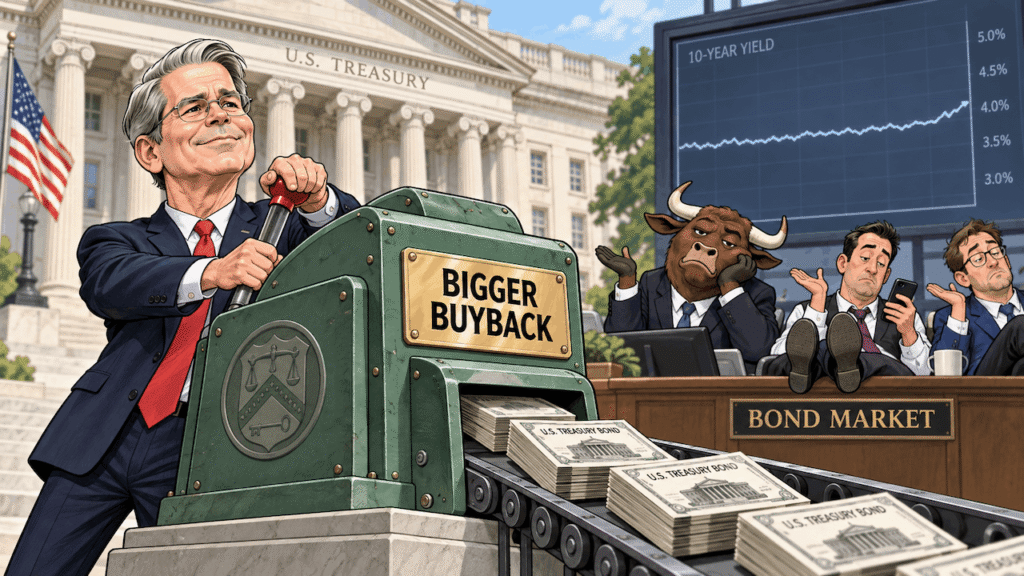
According to a source article, the U.S. Treasury plans to triple a long‑term bond buyback to $6 billion during a Thursday operation, but benchmark yields rose anyway. The piece portrays a clash between an expanded intervention and a market that “shrugged.”
What the source says is changing
The article states that on Wednesday, “Treasury Secretary Scott Bessent” announced a plan to raise the September 10 buyback operation to $6 billion. The same piece says Bessent had previously indicated at least doubling such operations from $2 billion to $4 billion beginning in September, and then increased the September 10 operation to $6 billion.
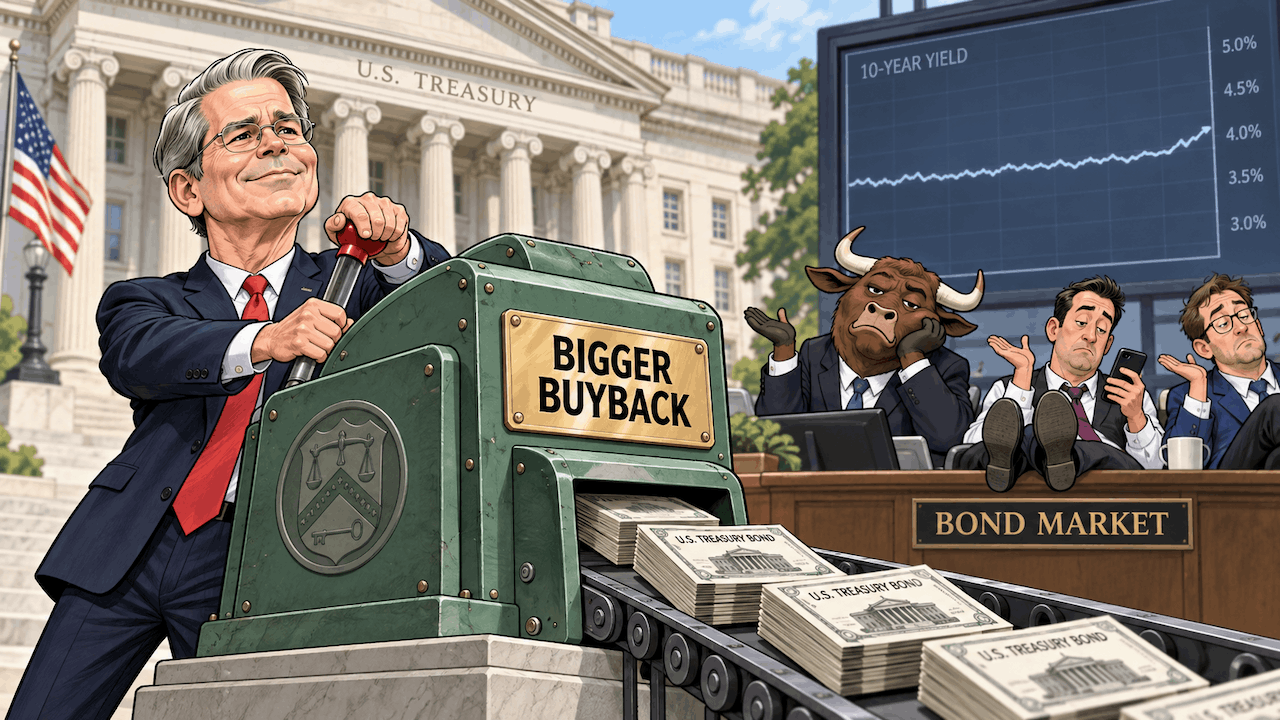
Per the source, yields initially dipped on the signals but quickly recovered. By Thursday morning, the article reports the 10‑year Treasury yield spiked above 4.9%—a level it says was last seen in June 2007—while the 30‑year reached 5.341%, which it says was last seen in June 2004. The source also asserts mortgage rates climbed to the highest level since July 2025.
How the buyback is described
The source explains that the Treasury would buy older long‑term bonds on the open market and retire them, aiming to raise prices and lower yields on the long end, and would fund this by selling shorter‑term notes and bonds. It characterizes $6 billion as small in the context of what it calls a $32 trillion bond market. According to the article, the Treasury describes the buybacks as a “liquidity intervention” to maintain “market plumbing.”
Analysts quoted in the piece
After the larger buyback was signaled, the article quotes Standard Chartered’s global head of research, Eric Robertsen: “The only conclusion we can draw is that yields reached a level that they don’t like, and I think that suggests a willingness to try and control or intervene against natural supply and demand.”

It also cites PGIM Credit chief investment strategist Robert Tipp, who told CNBC that markets appeared disappointed the move wasn’t bigger: “At the end of the day, the Treasury is issuing a spectacular amount of securities, and they’re trying to control the price level at the back end of the curve with really what, in the big scheme of things, is not necessarily a major operation. When they came out and said we would be buying at least 4 billion, I think market expectations were kind of thinking six to 10, and they’ve come in at the bottom end of the market’s expectations. As a result, you’re seeing a negative reaction here in the market with the sell-off at the back end of the curve.”
The source further quotes Stanley Druckenmiller warning that defending prices could force ever‑larger operations: “Once markets believe Treasury is defending a price, every rise in yields becomes a test of official resolve, and the operations must grow to survive the tests. Governments defending prices against fundamentals always lose. The only variable is how much they spend before conceding.”
Defense of the approach, via the source
The article reports that Bessent defended plans to “make the bond market move,” citing the New York Times as the venue for remarks that markets were “misreading the fundamental dynamics of the U.S. economy,” that American bonds had outperformed many other countries, and that his job was to ensure markets were “not misreading the fundamental dynamics of the economy.” It quotes: “Now I try to slow things down, to get people to get out of their fever dream and look at the facts.”
Source’s interpretation and reported precious‑metals move
The source contends that dwindling demand for U.S. debt and concerns about deficits and inflation are pushing up long‑term yields, and it characterizes the Treasury’s move as a signal of worry. It also claims the Treasury’s willingness to suppress yields is bullish for gold and silver, reporting that gold rose above $4,400 an ounce and silver above $67 an ounce on the news.
The piece argues that if markets accept the action as a “plumbing” fix, the impact will be limited; if they treat it as rate manipulation to control borrowing costs, it could spur a rotation into precious metals.